
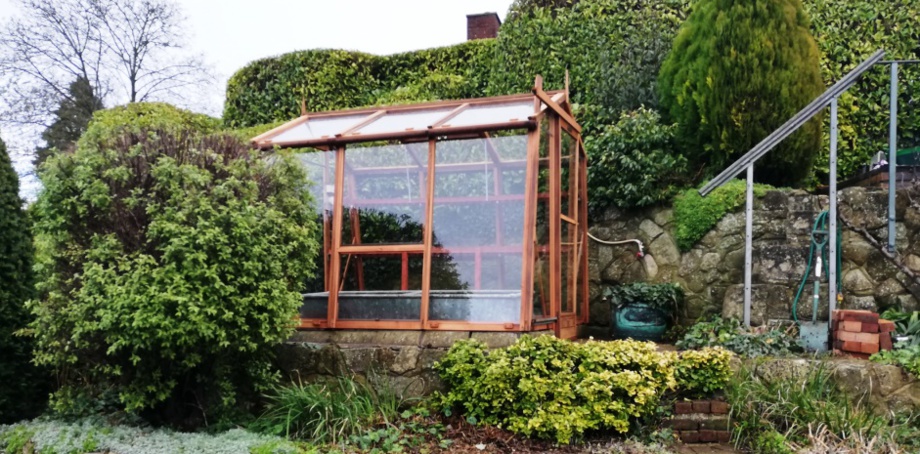
In the course of our work we often get asked question about the process, or tips and advice on garden buildings in general.
We are a friendly bunch and if we can help we will and have advised many for no financial reward. With years of experience looking at and building all sorts of structures we have a unique insight into the industry, whats good and whats not.
Crucially we are totally independent of any main stream producer. We are not 'registered' installers for a brand, or agents / sales person seeking to sell a product and therefore potentially biased.
Question: How long does a greenhouse restoration take?
The average time for a full restoration is 3-4 weeks from collecction to return. Now obvioulsy a larger greenhouse takes longer. Equally a restoration of a storm damaged frame may be quicker at a round a week.
Question: How long will a restored greenhouse last?
It will last as long as it did before the restoration took place perhaps longer if you follow ore tips on maintenance. So with many we do that are 20 plus years old assuming you treated them the same as you did before then 20+ years.
Hence why we call it full restoration.
Question: If i do have a problem, do you come back?
There has only ever been one issue with a greenhouse we have restored. It concerned a coloured paint on finish which we were asked to use and is widely advertised on sites selling garden buildings. The finish started to crack after a very cold winter (year of 'Beast from the East' which was perhaps a harsh test) and then began to peel away.
We responded by taking the greenhouse back and stripping all the applied paint finish off again. It was then re-finished in an oil which is what we always recomend. All at no expense to the client. It goes without saying that we have never used that product again
In answer to the question we will always stand by our work and if somethings we have done fails we remedy it.
Top tip from our clients....
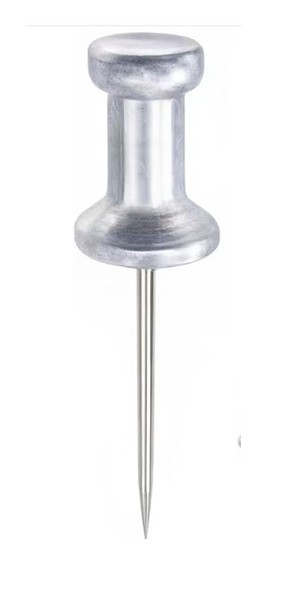
If you have a wooden greenhouse and use bubble wrap in winter, then don't secure it with standard drawing pins. These often break off leaving the pin portion in the wood.
Instead these push pins have metal heads that are easy to grip, 16mm spikes for secure grip and can be reused over and over again.
Search online for 'Optomni long push pins' for packs of 30
Question: What tips do you advise for garden building care?
- If we could give one piece of advise for all buildings it is make sure it has gutters and that they are kept clean. More buildings suffer from rot because roof water is allowed to run down the buldings than any other reason. If gutter leaks, fix or replace it. If water butts overflow onto the building, then fit an over flow pipe.
- The second most important thing to do is keep the building free from buiild ups of detritus like soil, leaves and even shingle. Wet rot fungus only need moisture (the UK has that in abundance) and a path to the timber to gain a foothold. You will not know it si there until it is too late. Wash down structures including glass at least once a year to remove leaves, mildew and and bird droppings.
- Our third tip is treat the building from time to time (this doesn't apply to aluminium greenhouses) Treatments are usually colourless and easily applied they work by being absorbed and when the wood is subject to insect or rot attack they neutralise it. See section on timber treatments and preservers.
- Finally allow good airflow around the structure. Most quality timber will put up with getting wet as long as it has a chance to dry out again. Positioning plants too close or piling up items against the building creates a micro climate and in goes the fungus.....
Question: why are there two thicknesses of glass used these day?
The old standard of glass used in greenhouses was 3mm horticultural glass but most quality manufcacturers in the UK now use 4mm Toughenend glass in their greenhouses because the UK industry standard for toughened glass in vunerable situation is 4mm thick. However China has now produced toughened glass just 3mm thick and some producers are using this instead to save cost.
The Glass industry refers to this as safety glass and although it does acknowledge that it has the properties of toughened glass, ie that it is 'Tougher' than standard glass and it breaks into small pieces. It is nowhere near as good as 4mm toughened glass especially in critical areas. As a rule 4mm Toughened glass is 4-5 time stronger tham 4mm ordinary glass and 6-7 times stronger than 3mm horticultural glass. Whereas 3mm toughened glass according to garden buildings manufacurer 'Swallow GB ltd' who use it, is just 2.5 times sronger than horticultural glass. The issue seems to be that if there is any movement or mishap then the glass can spontaneously disentegrate and this has earned it the nickname 'exploding glass' with some glass suppliers
The real issue is that you will struggle to get replacement glass made up as 3mm Toughenend glass if at all. Then you have to purchase the more expensive 4mm Toughenend glass instead, Loose too many and the costs soon outweighs the initial savings. Always check the specification to see what is being supplied.
Question: What causes wood to rot?
The enemy of timber buildings rotting is wet rot fungus
Wet rot is a very common fungal growth that is natures way of clearing away dead material. the fungus is literally everywhere, in the ground as feeding hyypae and in the air as spores. It has a vital role in breaking down and recyling old organic material, which is then made available to new growth. UNFORTUNATELY it doesn't discriminate and as far as it is concerned your prized wooden shed, summer house or greenhouse is just another dead tree.....
All wet rot fungus needs is a point of entry usually the ground but it can pass from an infected plant and old leaf litter. It can even enter as a fungal spore floating in the air. After that a reasonable supply of moisture is required for developement. This can be rain water, watering activity or even condensation. Finally an absence of UV light ie. the sun....Bases of buildings are particularily susceptible as are roofs and shaded damp areas.
It is also remarkeably resilient, In hot dry weather it can hybernate for months and waiting for moisture, If you remove a rotted area and don't treat the surrounding wood or the source of moisture (nearly impossible in a greenhouse) thn it simply starts up again.
It spread through the stucture deep within the timber, via fine thread like growths that are feeding off the timber these are called hypae. The first you will know is when it comes too close to the surface and the surface of the wood breaks away.

Top tip from our clients....
With our longer hotter summers cooling a greenhouse down can be an issue. A simple and effective method is to buy shading cloth and place OVER the greenhouse, tie or peg it down to stop it blowing away. Remove at the end of summer and store for next year
The RHS advise it is far better than internal shading as it stops the sun heating the glass and thereby the inside up.
Question: Cedar wood Paint or Oil finish - whats best?
In truth they both do the same job. Paint obvioously adds a splash of colour where as oil lets the natural wood stand out. As for which is best the difference is the application.
Oil finishes need applying every 3 - 5 years depending on conditions. They work well because they are drawn into the wood where they then dry out forming a barrier. The preparation is simply to clean down the surface and then apply with a brush. Most are tinted to restore the woods colour and have UV stabilisers to slow its degradation. It sis easy and on greenhuses useful because any that ends up on the glass can easily be wiped off or left for the sun to degrade. For us it is oil every time because its durable, leaves an attractive finish and is so easy to maintain. We have converted many owners who previously painted to the joys of 'oiling.'
Paint is usually every needed 4 - 5 years, never more than 6 years and never wait for it to start flaking. the 'achilles heel' is of course the preparation. The old paint needs rubbing down first which is quite the task. Then the surface needs one or two coats depending on the product to form a wetaher proof seal. The wood needs to be absolutely dry throughout the preocess so a summer task. Painting is not too bad on a shed but a real challenge on a greenhouse. The other issue with greenhouse painting is that most painting contractors won't undertake painting them, so then its the handyman and what ever his best efforts will be.....
Question: Timber preserver or treatments - what's the difference?
These two often get confused and they both work differently.
A preserver is basically a waterproofing product. The idea is that as the enemy is wet rot and it needs water then applying a coat of preserver prevents that water getting in. Good in principle but very hard to achieve succesfully. The issue wth some cheaper preservers is that the active ingredient that waterproofs the wood (usually wax based) are often in very small concentrations and they break down very quickly in strong sunlight.
A timber treatment is a chemical concotion usually totally clear and with a water like consistency. It contains additives to kill off the fungal and microbial 'enemies.' They also usually have chemical to prevent insects boring into the wood. It is easy to apply with a brush (avoid spraying) and once dry is harmless to plants and beneficial insects. We would always advise gloves, and some eye protection when applying and wash yours hands on completeion. Apart from this it a very easy and effective way of prolonging a buildings life. You actually need to apply both but alternate them so every few years (3 - 4 years is recomended) apply a preserver and then very occasionally add in a treatment.
Our top tip with both is NEVER APPLY TO WET TIMBER. Apply at the mid to end of summer not in spring and NEVER APPLY IN LATE AUTUMN or WINTER when the wood is wettest.
With wet wood the Timber Treatment cannot penetrate into the core of the timber. If you paint a preserver on wet wood the moisture is trapped inside, this is all the fungus needs......
Top tips from our clients.....
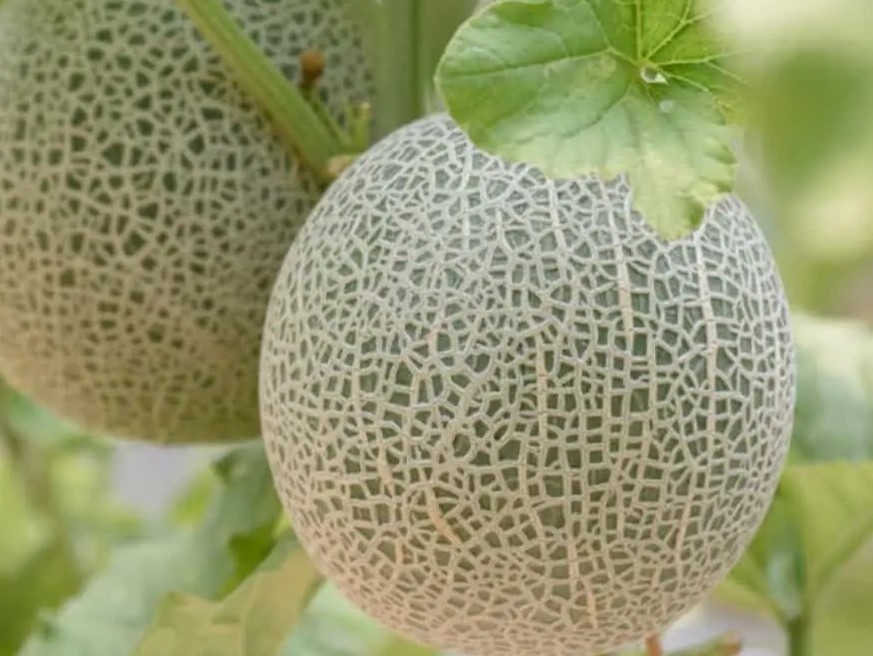
Ever tried to grow melons and struggled to support the heavy fruit as it swells. A client Sue grows her plants under her slatted greenhouse bench and trains the plant through the slots. The fruit then rest on an old egg and the bench carries the weight and she has huge melons.... sounds like a good idea.
Question: What makes a good timber greenhouse?
There are a myriad of timber greenhouses being produced today and made from all sort of wood in a range of sizes and styles but what really makes a good one.
Timber choice is important and traditionally this would be North Aerican Western Red Cedar which has a proven track record with greenhouses. However there is now Accoya which is a timber modified to naturally drive off moisture. This is equally as durable and quite commonly being offered. Aside from this there is 'treated woods' whether by chemical treatment (pressure treated) or by heat modification such as 'Thermowood.' Whilst they can be used special care should be exercised with greenhouse and these timbers.
Pressure treating is usually to UC3 grade which is outisde use but not ground contact. Pressure treating also does not make the wood waterproof and if it becomes water logged the chemicals leach out and the protection is lost. We have seen many fail after a few years. 'Thermowood' is a heat treatment BUT the treatment dramatically weakens the woods core strength meaning that it is only intended as a cladding or decking material. The producers specifically state it should not be used for structural situations and as a greenhouse frame is structural this makes it apoor choice. It is also prone to waterlogging and this dramaitcally shortens its life.
The other key element is frame construction. A good greenhouse will be well designed with timber frame components glued and jointed in a factory setting to ensure a rigid structure. They may then be further reinforced with screws but the core strength is the glued jointing. The frames are then often treated to provide a protective coating before delivery to site and asembly. One manufacturer offers a KIT based product where you assemble to compaonents on site with screws and whilst this will work ovger time the joints will loosen. Wood is organic and cedar is actually quite soft, it also changes with the moisture. Key is greenhouses have to withstand stormy weather and strong winds. Our experience with these are that owners have found issue with leaking and glass breakage and so it wouldn't be our first choice. Aluminum greenhouses are different, they rely on 'gusset' reinforcement of corners and cross bracing to add rigidity. Modern better quality models assembled properly and with all bolts tight are very strong structuarlly.
Key is no greenhouse should rely on the glass for rigidity. The frame is the strength the glass is simply the cladding.
Address
The Evergreen Workshop
Liphook
Hampshire
We often work out on site during the day and cannot always get to the phone, Equally when in the workshop we cannot often hear the phone (there is no answerphone service provided)
For best results Always contact us by email with full address, postcode and details of work required. Or alternatively use the contact form.
Email: evergreenworkshop@yahoo.com
Tel 01428 722700 not manned
Or use our contact form, please note must include an address and postcode.

Click the icon
to follow us on instagram.
 Print
